
Corporate Responsibility Through Responsible Operations

For a company at the center of the supply chain, corporate responsibility isn’t a policy attached to the work, it’s the standard the work must meet. It’s the way we operate, every day.
Burris Logistics and its brands, Honor Foods, Trinity Logistics, and Eagle Business Credit, each serve different corners of the supply chain. Responsible operations for Burris Logistics mean looking beyond the immediate task to consider the people, partners, communities, and resources connected to every decision across that family of businesses. It means running facilities safely and efficiently, investing in Team Members, cutting waste wherever possible, and improving how each company serves its customers.
That commitment supports Burris Logistics’ purpose of improving lives and supply chains by solving tough problems. It also reinforces something customers and partners have always expected from strong supply chain relationships: consistent service backed by responsible decision-making.

Responsibility Starts with How We Operate
Corporate responsibility gets discussed in terms of broad commitments, but its impact comes down to everyday operations.
Burris Logistics’ responsibility framework brings environmental, social, and governance priorities together under one set of shared values — the same values that connect Honor Foods, Trinity Logistics, and Eagle Business Credit as distinct companies with a common purpose. Environmentally, the focus is on technologies, equipment, and practices that cut waste, cost, and emissions while keeping operations safe and profitable. Facilities use LED lighting, efficient cooling systems, and insulation, and the fleet is designed with aerodynamics, safety, and operational efficiency in mind.
Responsibility also extends directly to Team Members across every Burris Logistics company. Workplace safety and health, employee assistance programs, education, professional development, mentoring, and community involvement matter equally across every business line. Each one operates differently, but they all share a through line grounded in Burris Logistics’ culture.
That points to something worth stating directly: responsible operations and strong operations tend to be the same thing.
Cutting unnecessary energy use is responsible and efficient. Preventing workplace injuries protects people while keeping operations running smoothly. Better planning cuts waste and improves service. Investing in Team Members builds stronger teams and deeper institutional knowledge.
Rather than treat responsibility as an initiative running alongside the business, Burris Logistics companies build it directly into how the business performs.
Sustainability Through Intelligent Supply Chain Decisions
That same thinking extends beyond the walls of Burris Logistics and into the broader supply chain, and Trinity Logistics offers the clearest example.
Trinity has participated in the U.S. Environmental Protection Agency’s SmartWay program since 2008. SmartWay helps organizations measure and improve freight transportation efficiency, and Trinity’s participation gives it access to relationships with SmartWay-certified carriers that track and work to minimize emissions.
Trinity Logistics’ 2026 sustainability guidance makes a point that sustainability doesn’t have to come at the cost of price or service. It focuses on practical operational decisions: mode selection, reducing empty miles, route optimization, drop-trailer programs, freight consolidation, and better transportation visibility.
Honor Foods applies a similar line of thinking to the redistribution side. Faster delivery windows, low order minimums, and multi-temperature warehousing, including our newest facility in Kissimmee, Florida, let customers order closer to what they need, reducing overstock and spoilage. The same model carries through Honor Foods’ family of brands: R.W. Zant brings protein expertise and just-in-time custom cutting to the West Coast, and Sunny Morning Foods brings dairy expertise and other broadline products through flexible, smaller-quantity ordering to the Southeast and beyond. Different products, same underlying idea: order what’s needed, when it’s needed, and waste less in the process.
A more efficient lane means fewer unnecessary miles. Better utilization means fewer wasted resources. The right transportation mode balances environmental impact against cost and service requirements. Greater visibility uncovers inefficiencies that would otherwise stay hidden.
For customers, that means responsible operations create benefits well beyond an environmental metric. They contribute to supply chains that run more efficiently, hold up under pressure, and get managed with more thought.
Safety, Accountability, and Continuous Improvement
Responsibility also means understanding where operations carry extra risk and building systems to manage it.
Trinity Logistics has been part of the Responsible Care® initiative since 2009. The chemical industry’s environmental, health, safety, and security initiative covers compliance, sustainability, continuous improvement, and transparency. Trinity applies those principles through carrier vetting, required Team Member training, and pollution liability coverage tied to chemical transportation.
Trinity’s current Responsible Care policy commits the company to operating safely and in an environmentally sound way, conserving resources, regularly evaluating its environmental, health, safety, and security performance, and identifying areas for improvement.
Trinity’s EcoVadis history follows the same trajectory: Bronze in 2023, Silver in 2024, and Gold in February 2026 — placing the company among the top 5% of businesses EcoVadis assesses worldwide. What matters more than any single medal is the pattern behind it: three straight years of measured improvement rather than a one-time commitment.
Eagle Business Credit brings a similar discipline to a different kind of risk. Through its Cashway division, Eagle Business Credit helps carriers get paid quickly, keeping smaller trucking operations financially stable and able to continue serving customers reliably. Financial responsibility to partners is still responsibility, it just shows up on a balance sheet instead of an emissions report.
The value of programs like Responsible Care and SmartWay isn’t the ability to point to a membership. They’re external frameworks that turn commitments into expectations, measurement, and action.
That points to another core piece of responsible operations: continuous improvement.
Supply chains change. Technology changes. Customer expectations change. Risk changes. Responsible companies keep asking where processes can get safer, more efficient, more sustainable, and more effective, and Trinity Logistics’ medal history, Honor Foods’ facility investments, and Eagle Business Credit’s funding speed are three different answers to that same question, coming from three different companies.
Responsibility Supports Service Excellence
Responsible operations matter because supply chains run on relationships.
Customers rely on logistics partners to handle products safely, make sound decisions, respond to changing conditions, and improve operations. Carriers need clear communication and dependable partners. Team Members need safe workplaces and room to grow. Communities expect businesses to understand their impact beyond their own walls.
Serving all those groups across Burris Logistics’ service lines takes discipline.
That’s why corporate responsibility and service excellence aren’t competing priorities. Done well, they reinforce each other.
Efficient facilities support dependable operations. Strong safety practices protect people and keep the business running. Smarter transportation planning cuts waste and cost at the same time. Training and development equip Team Members with the knowledge to solve increasingly complex problems as they arise. Industry partnerships add another layer of accountability.
Together, these practices strengthen the trust that long-term business relationships depend on.
Building for the Long Term
Burris Logistics has grown by building relationships meant to last, and its family of companies reflects that same thinking applied to three different corners of the supply chain. Responsible operations protect those relationships and the businesses behind them for the future.
That means continuing to examine how facilities operate, how freight moves, how Team Members are supported, how resources are used, and how each Burris Logistics company applies its expertise responsibly.
There will always be more work to do. Continuous improvement is part of the point.
Corporate responsibility isn’t about claiming every challenge is solved. It’s about making responsible choices consistently, measuring progress, learning, and finding better ways forward.
For Burris Logistics, Honor Foods, Trinity Logistics, and Eagle Business Credit, that connects directly to the work they do every day: solving tough problems, serving customers well, supporting people, and building supply chain partnerships built to last.
-
Categories:
- Ecommerce Fulfillment,
- Featured,
- Latest,
- redistribution,
- Shipping,
- Warehousing,
About ONEBURRIS
Established in 1925, Burris Logistics operates an expanding network of temperature-controlled warehousing and distribution centers from Maine to Florida and as far west as Oklahoma. This fifth-generation family-owned enterprise provides leading-edge logistics, transportation, and supply chain solutions, coast to coast, through our Brands: Burris Logistics (Direct-to-Consumer fulfillment “D2C”, distribution, warehousing), Honor Foods (a redistributor of frozen, refrigerated and dry foodservice products), and Trinity Logistics (a global freight solutions provider). For more information about our end-to-end supply chain solutions, please visit www.burrislogistics.com.

One Family, Three Specialties: How Burris Logistics Connects It All
Being a family of specialized companies isn't a structural quirk — it's the strategy. Burris…
Read More
Corporate Responsibility Through Responsible Operations
For Burris Logistics and its family of businesses—Honor Foods, Trinity Logistics, and Eagle Business Credit—corporate…
Read More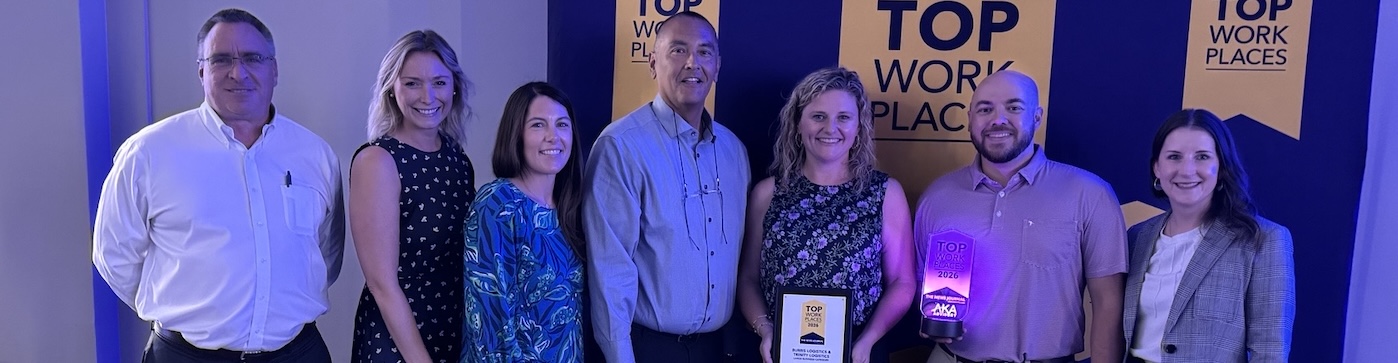
People-First Excellence: Burris Logistics, Trinity Logistics Named Top Workplaces in Delaware
Employee feedback lands Burris Logistics and Trinity Logistics a 2026 Delaware Top Workplace award. See…
Read More